Last updated: October 2026
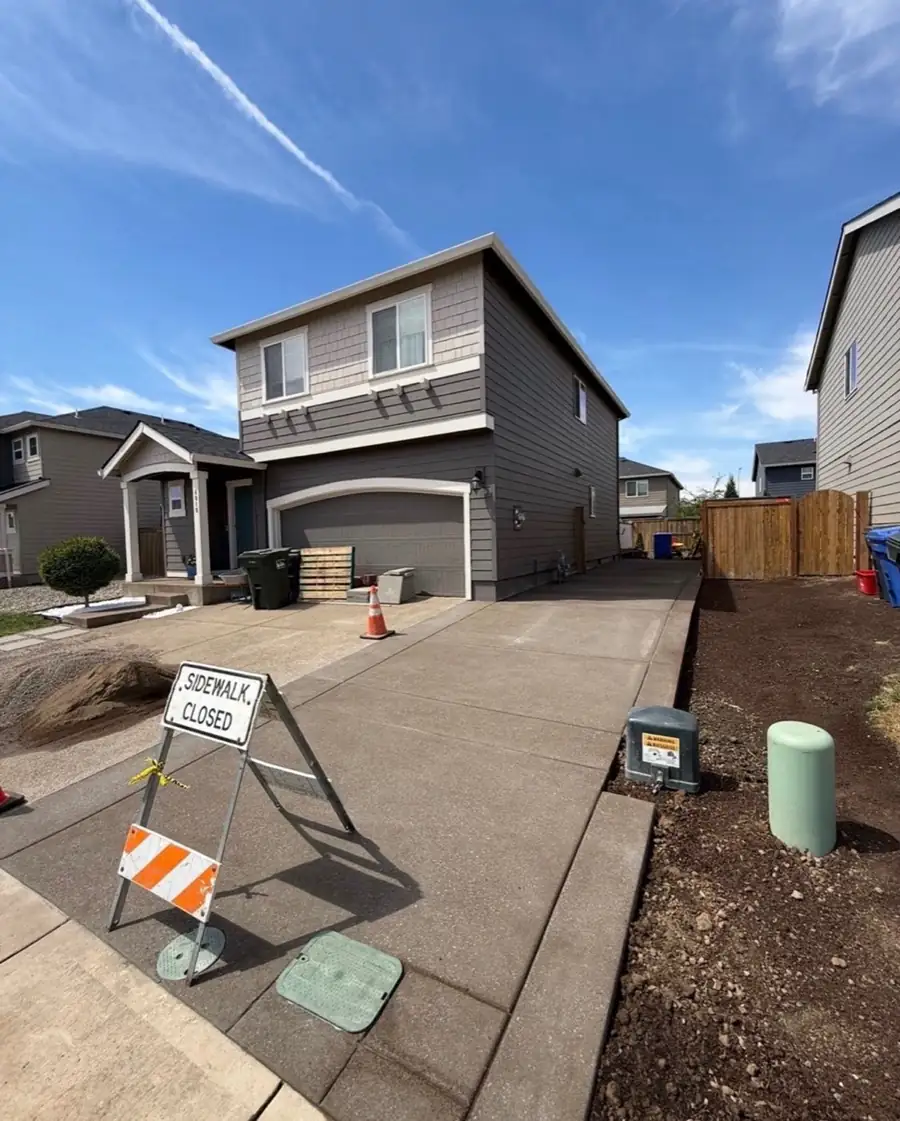
Quick answer
A concrete driveway that survives Willamette Valley winters is built from the ground up: excavation, a compacted crushed-rock base, forms, rebar or wire mesh, correctly spaced control joints and a broom finish that grips in the rain. Albany Concrete pours new driveways and full replacements for homeowners in Albany, Corvallis, Lebanon and across Oregon. Estimates are free and on-site. Call (503) 862-3881.
What a concrete driveway installation includes
A driveway is a structural slab, not an oversized sidewalk. It carries a parked truck every day, the occasional moving van or delivery, and a winter of rain soaking into the soil beneath it. Every driveway we scope follows the same order of work: remove whatever is there, excavate to depth, compact a rock base, set forms, place reinforcement, pour, finish and cut control joints. Leave out any one of those steps and the driveway usually tells you within a few wet seasons, with a settled corner, a wandering crack or a pooled puddle by the garage door.
The process starts with a free on-site estimate. We walk the grade, note where roof and yard water currently goes, check how the slab will meet the garage floor, the sidewalk and the street, and look at how a concrete truck and any equipment will reach the site. Photos and rough dimensions help if you would like to talk it through by phone first, but nothing replaces standing on the actual ground.
New driveways, replacements and resurfacing
New driveway installation
This is a full pour on new construction, or the conversion of a gravel or worn-out drive into a durable concrete surface. We grade the base so water leaves the garage and house, and we form the driveway to the width and shape you choose, including gentle curves, flared aprons and a turnaround where the lot allows.
Driveway replacement
When concrete has cracked apart, sunk or heaved, patching the surface rarely fixes why it failed. Replacement means demolishing and hauling off the old slab, correcting the soft or wet spots underneath, and pouring new concrete with reinforcement and a joint plan. We tell you plainly when a full tear-out is better value than a patch and when only one or two panels really need to be redone.
Resurfacing
If the slab underneath is structurally sound and the complaint is a worn, stained or scaled surface, resurfacing can renew an older driveway. It is not a cure for a slab that is settling or badly cracked, and we say so at the estimate rather than selling a cosmetic fix that will not last.
Base, thickness, reinforcement and joints
Four choices decide how long a driveway lasts. The base is compacted crushed rock that drains and keeps the slab from shifting. Thickness should match the load: four inches is a common residential standard, with more where RVs, heavy pickups or delivery trucks will regularly drive. Reinforcement, meaning rebar or welded wire mesh, helps hold cracks tight if they form. Control joints are cuts that tell the concrete where to crack, so movement happens along a straight line instead of a random one across the middle of a panel.
All concrete shrinks a little as it cures, so a hairline crack on its own is not proof of bad work. What you want is a driveway where cracks stay tight, panels stay level with each other and water runs off instead of settling. Our process and permits guide walks through each of these steps in the order they happen.
Finishes: broom, exposed aggregate and stamped
The standard finish is a broom finish, a light texture that gives tires and shoes traction when the surface is wet, which matters through our long wet season. Exposed aggregate washes away the thin cement film on top to reveal the stones inside; it hides small stains and leaves a textured, slip-resistant surface. Stamped and colored finishes add pattern and color and are most often used on an apron, a border or an entry strip rather than the entire drive. See our stamped and decorative concrete page and the guide to stamped concrete vs pavers if you are comparing options.
Built for wet valley winters
Albany, Corvallis and Lebanon sit on valley-floor and terrace soils that are often silty or clay-rich and slow to drain. Water in the base, not cold, is the usual enemy of driveways here. A driveway that slopes correctly, sheds water toward the street or a planned drain, and sits on a compacted rock base will handle rain, and the occasional freeze, for decades. Shaded driveways also grow moss and algae that can turn slick, which is why finish texture and sealing choices matter. Everything about drainage, freeze-thaw and moss is covered in our Willamette Valley wet-climate guide.
Timing, curing and when you can use it
Concrete is hard enough for careful foot traffic in about a day, but it keeps gaining strength for weeks. Cars are generally kept off for around a week, and heavy trucks or RVs are best kept off longer, depending on the mix, thickness and weather. Cold, damp valley weather can slow curing, and we plan pours around workable windows rather than pouring into a storm. Expect to keep sprinklers, pets and bikes off the new surface for the first days, and to hold off on de-icing salt for the first winter.
Comparing driveway bids
A written driveway proposal should tell you the square footage, slab thickness, base depth, reinforcement type, joint layout, finish, what is removed and hauled away, and who handles any permit for the street approach. If a bid leaves those out, ask. The prep and warranty guide is a checklist you can hold up against any estimate, ours included, and the cost guide explains what drives price without pretending to quote a number online.
From pour to parking: a driveway timeline
- Estimate and layout: we measure, check slope and drainage, and agree on thickness, base depth, reinforcement and joints in writing.
- Tear-out and base: the old surface is removed, soft soil is dug out, and a rock base is placed and compacted.
- Forms and reinforcement: forms set the edges and the slope that sheds water; reinforcement goes in as specified.
- Pour and finish: concrete is placed, struck off, floated and finished, usually with a broom texture for grip in the rain.
- Joints and curing: control joints are tooled or saw-cut, and the slab is kept moist or covered while it cures.
- Back to use: walking after a day or two, cars after about a week, heavy trucks later, depending on the mix and weather.
Our process and permits guide covers each step in more detail.
Driveway approaches and the City
The part of a driveway that crosses the sidewalk and meets the street is usually in the public right-of-way. In Albany and most Oregon cities, work on that approach or on a curb cut involves a city permit and city standards, even when the rest of the driveway does not. We go over what applies to your address at the estimate, and a good written bid should say who handles it.
Frequently Asked Questions
How thick should a residential concrete driveway be?
Four inches is a common minimum for passenger vehicles, with five or six inches often used where heavy trucks, RVs or equipment will drive. Base depth and reinforcement matter as much as thickness.
Can you replace only part of my driveway?
Often yes. We check drainage, thickness and the condition of the neighboring panels, then recommend a section replacement or a full tear-out, whichever will actually last.
Do you pour driveways in the rainy season?
Yes when conditions allow. Light rain and cool temperatures affect placement and curing, so we schedule around workable windows and protect fresh concrete when weather turns.
How long before I can drive on a new concrete driveway?
Walking is usually fine after a day or two, and cars after about a week. Heavy trucks and RVs should wait longer, depending on the mix, thickness and weather.
Do I need a permit for a driveway approach in Albany?
Usually yes for the approach or curb cut in the public right-of-way, even when the driveway on your property does not need a building permit. We review it at the estimate.
Should I seal a new concrete driveway in the Willamette Valley?
Sealing is optional for plain broom-finish driveways but helps resist staining, moss and water absorption, and it matters more on stamped or colored concrete. Wait until the slab has cured before sealing.
Related services
Helpful guides
Ready to talk about your project? Call or text (503) 862-3881, Monday to Saturday, 7:00 AM to 8:00 PM, or use the free quote form.
Call (503) 862-3881