Last updated: October 2026
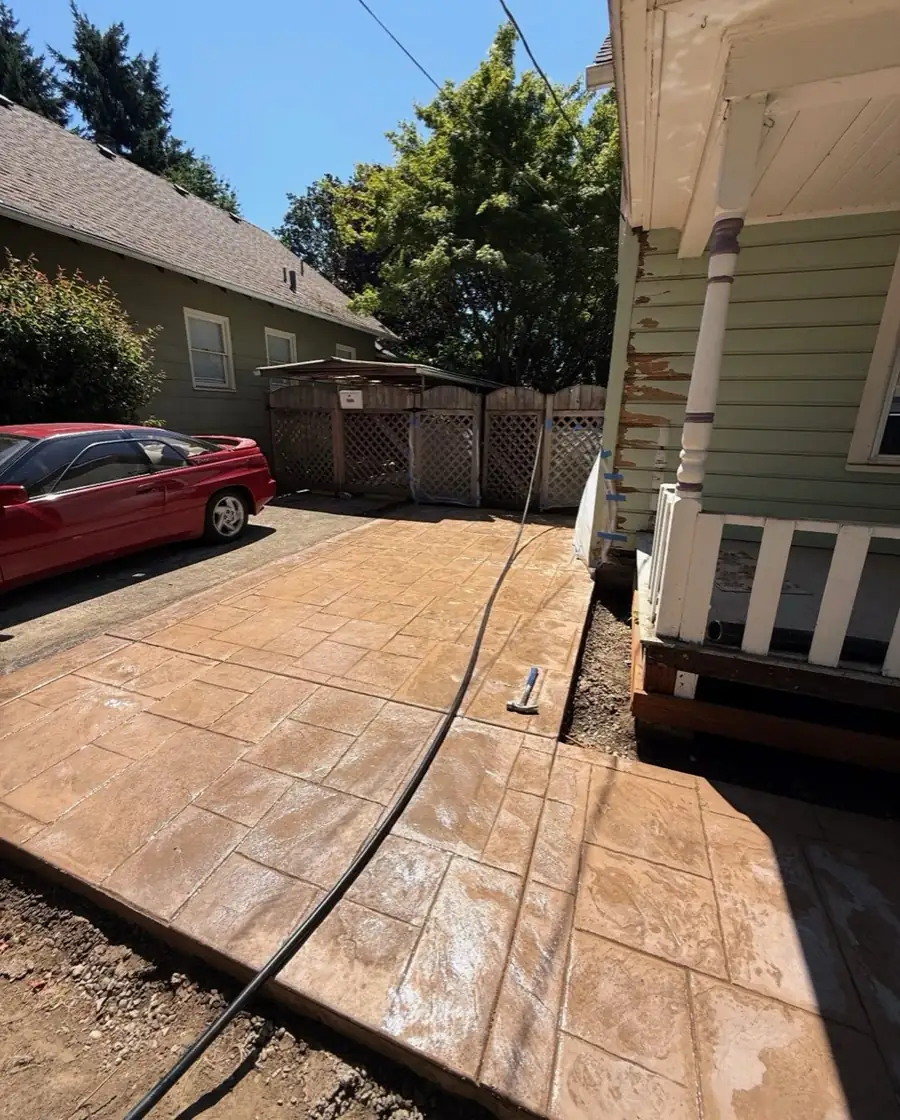
Quick answer
Stamped concrete presses stone, slate, brick, cobblestone or wood-plank patterns into a poured slab and adds color and sealer, giving a paver-style look with a continuous surface. In the Willamette Valley, success depends on a proper base, well-placed joints, slip-resistant sealing and realistic care. Albany Concrete installs stamped patios, walkways and driveway aprons in Albany, Corvallis, Lebanon and beyond. Free estimates: (503) 862-3881.
How stamped concrete is made
Stamped concrete is ordinary structural concrete with a decorative surface. After the slab is placed and floated, color hardener or release agent is applied, then textured mats or stamps are pressed into the surface while it is still workable. The color layers, the release agent and the sealer combine to give the pattern its depth. Everything under the surface, the compacted base, thickness, reinforcement and joints, should be the same as for any other quality slab. A stamped pattern cannot hide a poor base.
Timing is the craft. Stamping happens inside a narrow window while the concrete is workable but firm enough to hold an impression. That window is shorter in warm, dry weather and longer in cool, damp conditions, which can make Willamette Valley spring and fall days good for stamping but hard on cure and sealing schedules.
Patterns and colors that suit your home
The best pattern usually echoes something already on the property: the tone of the roof, the stone on a chimney, the siding color. Large-format stone and slate patterns look natural and hide small variations. Brick and cobblestone suit traditional homes. Wood-plank looks work near decks and gardens. Keep colors in the mid-range for full sun, since very dark slabs get hot underfoot and pale slabs show leaf stains. Look at any color sample outdoors, in the light the patio will actually get, and remember that a sealer deepens color.
Where stamped concrete works best
Stamped concrete is a strong fit for backyard patios, entry walkways, pool-style decks, driveway aprons and borders. It is less common as an entire driveway because of cost and wear. On slopes or steps it needs a slip-resistant approach. On hot-tub or fire pit surrounds it can create a finished feel. The patios page covers layout and use cases, and the walkways page covers entries and steps.
Joints, cracks and expectations
Stamped surfaces show cracks more than plain concrete because the eye reads the pattern. To manage this, joints are placed where they can follow pattern lines, and the slab is reinforced and poured on a solid base. A hairline crack may still appear and should be understood as a normal property of concrete, not a defect in itself. A written scope should say how joints will be handled and what the warranty says about cracking.
Sealing, slip resistance and moss
Sealers protect color, resist stains and add sheen. In our climate the choice matters. A glossy film-forming sealer looks rich but can be slick when wet unless a grit additive is used. A penetrating sealer leaves a more natural surface. Most sealers need re-application every few years depending on sun, traffic and product. Shaded stamped patios can grow moss or algae like any other slab; gentle cleaning and airflow are the best defenses. See the wet-climate guide for cleaning cautions.
Stamped concrete or pavers?
Both are good choices. Stamped concrete usually costs less and has no weeds or shifting joints; pavers are easier to repair section by section and can be more forgiving of settlement. Our honest comparison, including care and repair differences, is in stamped concrete vs pavers. We install stamped and decorative concrete; if you decide pavers suit your site better, we will tell you.
Planning for leaves, shade and everyday care
Stamped surfaces are easy to live with once you know the rhythm. Sweep leaves before they sit and stain in fall, rinse pollen and dust in spring, and keep planters on feet or saucers so water and fertilizer do not mark the sealer. Use a soft-bristle brush and mild cleaner rather than a pressure washer aimed close to the surface, which can strip sealer and open the pores. Avoid rock salt and harsh de-icers, especially during the first winter, since they can cause scaling on young concrete. Plan to re-seal every few years, and ask us what product is on your slab so the next coat is compatible.
When stamped concrete makes sense
Stamped concrete is a good fit when you want the look of stone, slate, brick or wood plank with the strength and continuous surface of a poured slab. It is most common on patios, front walks and entries, pool and hot-tub surrounds, and driveway borders or aprons. It is worth considering when an old patio is cracked or heaving, when water pools on the current surface and the base needs to be rebuilt anyway, or when a plain slab simply looks worn next to the house. Our stamped concrete vs pavers guide compares it with the main alternative.
Best season to stamp in Albany
Stamping depends on timing: the pattern has to be pressed while the concrete is still workable, then the slab needs a steady cure and a dry day for sealing. Late spring through early fall gives the most reliable conditions in the mid-valley. Hot, dry afternoons shorten the working window, and cool, damp days lengthen curing and push back sealing. We schedule around the forecast rather than force a pour into a rainy week.
Cost and permits
Stamped concrete costs more than plain broom-finish concrete because of the color, release agent, stamping labor and sealer. Published national cost guides commonly put stamped concrete at roughly $12 to $25 per square foot installed; that is a national range for context, not our price. Our concrete cost guide explains what moves the number. A stamped patio on private property usually does not need a building permit, but anything in the public right-of-way, such as a driveway approach, does involve the city. The permits and process guide covers the details.
Frequently Asked Questions
How long does stamped concrete last?
With a solid base, sound joints and occasional resealing, stamped concrete can last for decades. Color and sealer will need refreshing sooner than the slab itself.
Does stamped concrete crack?
Any concrete can crack. Reinforcement, joints and a compacted base reduce random cracking, and hairline cracks are normal. Ask how your proposal handles joints.
Can existing concrete be stamped?
Existing slabs can sometimes be resurfaced with a stampable overlay, but results depend on the condition of the slab. We inspect before recommending it.
What time of year is best for stamped concrete in Albany?
Late spring through early fall gives the most reliable working, curing and sealing conditions. Wet-season stamping is possible but depends on the forecast.
How much does stamped concrete cost?
Published national cost guides commonly put stamped concrete at roughly $12 to $25 per square foot installed. That is a national range for context; we quote each project after seeing the site.
How soon can I use a new stamped patio?
Light foot traffic is usually fine after a day or two. Furniture and grills should wait several days, and the sealer goes on once the slab has cured enough and the weather is dry.
How often does stamped concrete need resealing?
Most sealers need reapplying every few years, depending on sun, traffic and product. Shaded, damp patios may need cleaning and resealing more often to keep moss and slipperiness down.
Do I need a permit for a stamped patio in Albany?
A patio on private property usually does not need a building permit. Work in the public right-of-way, such as a driveway approach or sidewalk, involves the City of Albany.
Related services
Helpful guides
Ready to talk about your project? Call or text (503) 862-3881, Monday to Saturday, 7:00 AM to 8:00 PM, or use the free quote form.
Call (503) 862-3881