Last updated: October 2026
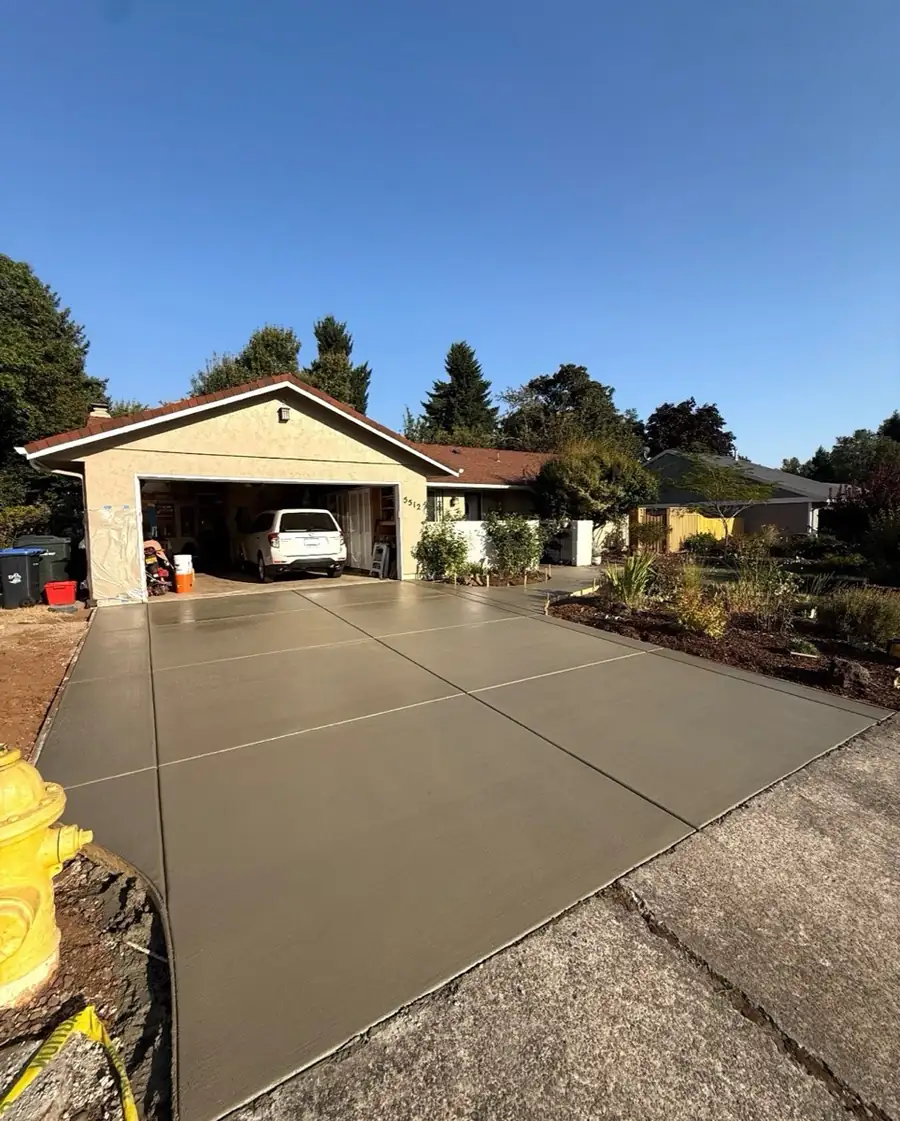
Quick answer
Concrete usually costs more up front and lasts longer with less maintenance; asphalt usually costs less up front, needs sealing and patching, and is easier to repair in place. In the wet Willamette Valley, both work when the base and drainage are right. We install concrete, not asphalt, so weigh our bias and use the checklist below either way. Call (503) 862-3881 for a free concrete estimate.
Full disclosure first
Albany Concrete installs concrete. We do not install asphalt. That means we have a stake in this comparison, so we have tried to state the trade-offs the way a fair-minded neighbor would. Asphalt is a good driveway surface in many situations, and the honest answer for some homes is asphalt. If your budget, lot or timeline points that way, we would rather you make a good choice than a regretted one.
Side-by-side comparison
| Factor | Concrete | Asphalt |
|---|---|---|
| Up-front cost (nationally) | Usually higher | Usually lower |
| Typical lifespan (commonly cited) | Often 30+ years with good base and care | Often 15 to 25 years with maintenance |
| Maintenance | Low: clean, seal joints, repair cracks | Sealcoating every few years, crack filling, patching |
| Appearance | Light; can be colored, stamped or textured | Dark, uniform, less design flexibility |
| Heat | Reflects heat and stays cooler | Absorbs heat and can soften in hot spells |
| Repairs | Harder to hide; sections are replaced | Easier to patch and overlay |
| Wet-weather traction | Good with a broom finish; moss can make shade slick | Good; algae can also grow in shade |
Lifespans are commonly cited ranges and depend on base, drainage, traffic and care.
How each surface handles valley weather
Rain is the daily test in Albany, Corvallis and Lebanon. Neither surface tolerates a wet, soft base, and a poorly drained driveway fails either way. Concrete does not soften with heat and does not need sealcoating, but it can grow slippery moss and algae in shade and needs joints that let it move. Asphalt is flexible, which helps with minor ground movement, but it needs periodic sealcoating and crack filling to keep water out of the base. The occasional freeze matters less than water sitting in the base. Read more in the wet-climate guide.
Cost over time, not just day one
A lower first cost is a real advantage of asphalt. Over a long period, repeated sealcoating and patching add up, while concrete usually has fewer recurring costs but a higher bill if a slab has to be replaced. The right comparison is total cost of ownership over the years you expect to stay in the house. Our cost guide explains the cost drivers and shows national ranges only.
Curb appeal and resale
Concrete can be broom-finished, exposed aggregate, colored or stamped, and often reads as a higher-end surface. A clean asphalt driveway looks sharp too. What buyers notice most is condition: a cracked, patched or stained driveway of either kind costs curb appeal, and a well-built one helps. Some HOAs specify surface types, so check yours before deciding.
When asphalt might be the better choice
Asphalt can be the practical answer when budget is the priority, for very long rural driveways where concrete would be expensive, or where the ground moves a bit and flexibility helps. If that is your situation, get bids from an asphalt paving contractor. If you want a long-lived, low-maintenance surface, concrete is what we build, and we will tell you if we think your site is a poor fit.
Whichever you choose, insist on these
- A compacted crushed-rock base of stated depth, with drainage planned
- Stated thickness in writing, more where heavy vehicles will drive
- A joint plan for concrete, or proper compaction and edge support for asphalt
- Removal and haul-off of the old driveway itemized
- A written scope of who handles permits and cleanup
See how we build in concrete driveways and the process guide.
Questions to ask an asphalt or concrete contractor
Ask how deep the base will be and what it is made of, whether a drainage plan exists, how thick the surface layer will be, when the first sealcoat or seal is recommended and what the contractor will do if the driveway settles or cracks in the first year. Ask to see a similar driveway that is at least five years old. A contractor who is proud of the work will usually be glad to point you to one.
Frequently Asked Questions
Which lasts longer, concrete or asphalt?
Commonly cited figures put concrete at 30 or more years and asphalt at 15 to 25, but base, drainage, traffic and care matter more than the material.
Do you install asphalt?
No. Albany Concrete installs concrete only. For asphalt, hire an asphalt paving contractor.
Related guides
Our services
Ready to talk about your project? Call or text (503) 862-3881, Monday to Saturday, 7:00 AM to 8:00 PM, or use the free quote form.
Call (503) 862-3881