Last updated: October 2026
Quick answer
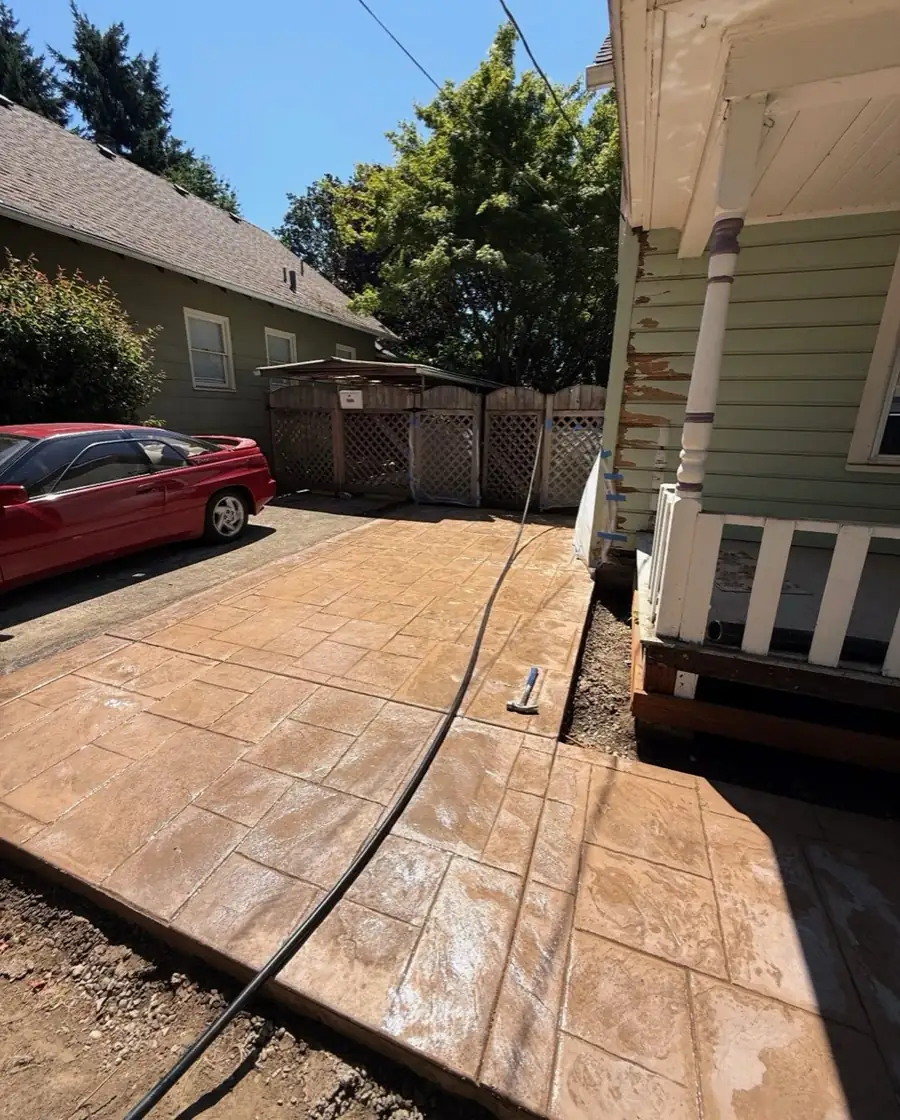
Stamped concrete is a continuous poured surface that usually costs less and has no weeds or shifting joints. Pavers are individual units that are easier to repair in sections and handle small ground movement better, but they cost more and need joint upkeep. In wet Oregon, both work when the base is right. We install stamped concrete; if pavers suit your site better, we will tell you. Call (503) 862-3881.
How they differ at a glance
| Factor | Stamped concrete | Pavers |
|---|---|---|
| Up-front cost (nationally) | Usually lower | Usually higher |
| Weeds and joints | No joints between units; occasional control joints | Joints need sand refilling; weeds can grow |
| Repairs | Cracks can be filled or patched; color match is hard | Lift and replace individual units |
| Ground movement | Can crack | Flexes; can settle or tilt |
| Moss and algae | Grows in shade; can be cleaned | Grows in shade and in joints |
| Color and pattern | Set at pour; sealer refreshes | Wide range of shapes and colors |
Costs and lifespans depend on materials, base and labor. See national ranges in the cost guide.
Cost and value
Stamped concrete usually costs less per square foot than a paver installation of similar size, because one crew places and finishes a single slab, while pavers are laid unit by unit on a graded, compacted base with edge restraints. Over time, pavers may cost more to keep up because of joint sand and weed control, and stamped concrete may need resealing every few years. Both add curb appeal, and quality of installation matters more than the label.
Repairs and settlement
This is where pavers shine. If a tree root lifts a paver, you can pull up the units, level the base and reset them. Stamped concrete that cracks can be filled or patched, but the repair is often visible, and matching color is tricky. On sites with reactive or soft soils, or where roots and utilities may need access, pavers are more forgiving. On stable, well-drained sites with a good base, stamped concrete performs very well.
Wet-weather performance
Both surfaces can be slippery when algae grows on them. Textured stamped patterns and sealers with grit provide traction, while some pavers have smooth faces that get slick. Joints in pavers hold sand that can wash out in heavy rain, and polymeric sand helps but is not permanent. Concrete sheds water across the surface toward its slope, so getting that slope right matters. Drainage and base thickness matter as much as the material. See the wet-climate guide.
Slopes, steps and driveways
Pavers are common on driveways and slopes when installed with heavy-duty base and edge restraints, but they can shift under turning tires without the right preparation. Stamped concrete works on slopes with a slip-resistant finish, and can be shaped into steps and landings. For a whole driveway, plain or exposed-aggregate concrete is usually the practical choice, with stamped borders or aprons for accent.
How to choose
Choose stamped concrete if you want a lower up-front cost, a continuous surface and easy sweeping. Choose pavers if you expect ground movement, tree roots or utility access, or want the ability to repair unit by unit. Either way, insist on a compacted base of stated depth, proper edges and drainage in writing. Our stamped concrete page shows patterns and finishes, and our patios page covers layout.
Questions to ask before you decide
Ask each installer what the base depth will be, how edges will be restrained or reinforced, what sealing or joint-sand maintenance is expected and how repairs are handled. Ask for a sample or a finished example that has been through at least one Oregon winter. If you have trees nearby, ask how roots will be managed. The answers tell you more than the brochure does, and they often reveal which option suits your site.
Blending the two
You do not always have to choose one. Many patios combine a stamped or broom-finished concrete field with a paver border, or a poured slab with a paver inlay at the entry. The mix gives the durability and lower cost of concrete in the large area, and the texture and repair flexibility of pavers where they matter most. Talk through the layout with a designer or contractor before you commit.
Frequently Asked Questions
Which is cheaper, stamped concrete or pavers?
Nationally, stamped concrete generally costs less to install. Actual prices depend on materials, base and site.
Does Albany Concrete install pavers?
We focus on poured concrete, including stamped and decorative work. If pavers fit your site better, we will say so.
Which is easier to repair?
Pavers, because individual units can be lifted and replaced. Stamped concrete repairs are possible but often visible.
Is stamped concrete cheaper than pavers?
Often, yes, for the initial install: national cost guides commonly put stamped concrete below interlocking pavers per square foot. Pavers can cost less to repair in small sections, while stamped concrete needs periodic resealing. These are general national patterns, not Albany Concrete prices.
Which lasts longer in Oregon's wet climate, stamped concrete or pavers?
Both can last decades when the base and drainage are done well. Pavers resist cracking but can shift and grow moss in joints; stamped concrete has no joints for weeds but can crack and needs resealing.
Related guides
Our services
Ready to talk about your project? Call or text (503) 862-3881, Monday to Saturday, 7:00 AM to 8:00 PM, or use the free quote form.
Call (503) 862-3881