Last updated: October 2026
Quick answer
A good concrete bid spells out five things: excavation and compacted base, slab thickness and reinforcement, joint layout, finish and curing, and what the workmanship warranty covers and excludes. If a bid leaves any of those out, ask. Albany Concrete puts them in writing on every proposal. Free estimates: (503) 862-3881.
Why prep matters more than the finish photo
A driveway, patio or walkway that lasts in the mid-Willamette Valley starts long before the truck arrives. Soil preparation, base, reinforcement, jointing, finishing and curing decide whether flatwork looks good for a season or for decades. Oregon winters bring rain, saturated soils and the occasional freeze that punish shortcuts. A glossy broom finish over an under-compacted base or missing control joints is a warranty claim waiting to happen. We treat excavation depth, drainage away from structures and joint layout as part of the product, not optional upgrades.
What a solid proposal lists
- Square footage and slab thickness, including thickened edges where used
- Base material and depth, and how it will be compacted
- Reinforcement type: rebar or wire mesh, and how it is supported
- Joint layout: control and isolation joints and their spacing
- Finish: broom, exposed aggregate, stamped or other, plus color and sealer
- Demolition, haul-off and disposal of existing concrete
- Drainage corrections, downspout connections and slope
- Permit responsibility and HOA approvals
- Schedule, weather policy, payment terms and cleanup
- Warranty terms in writing
Our typical flatwork process
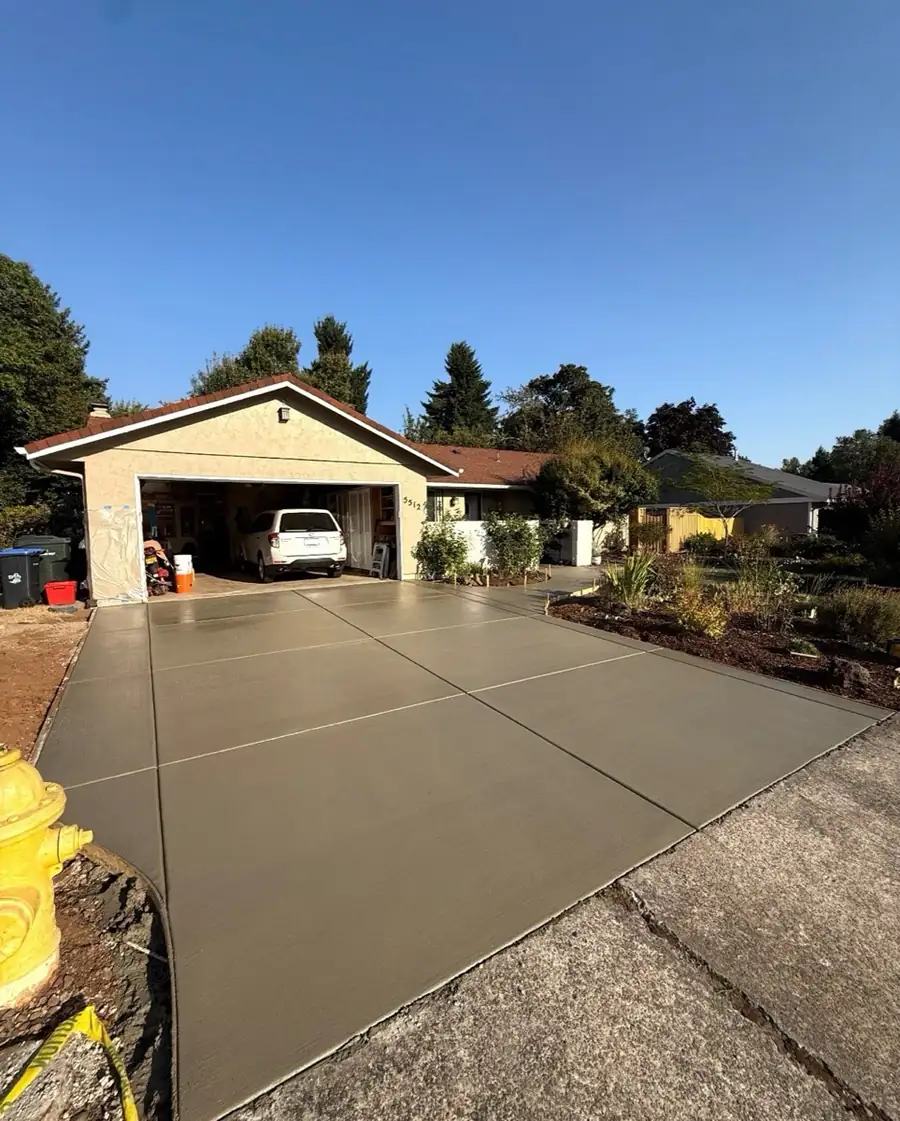
Each job follows a sequence: site evaluation and layout, excavation and base, forms and reinforcement, placement and finishing, jointing and curing, and a final walkthrough. Layout matters because poor joint placement is a leading cause of random cracking that owners mistake for bad concrete. Compaction of the base is as important as the mix. Reinforcement is chaired up into the slab, not buried in the dirt. And a walkthrough at the end compares grade, drainage direction, joint placement and finish against the agreed scope so completion is clear before we leave. The project process guide covers the steps in more depth.
Curing and early care
Timely control joints and curing protection reduce shrinkage cracking and early-age damage. We explain when you can walk, park and seal, and what weather delays mean. Keep sprinklers off new concrete, avoid de-icing salts in the first winter, and hold off on heavy vehicles until we say the slab is ready. A hairline shrinkage crack is normal; joints are cut to guide it.
What a workmanship warranty typically covers
Warranty terms are written into each contract because residential and commercial scopes differ, and we do not publish a one-size warranty here. In general, a workmanship warranty covers placement, finishing and jointing performed to the proposal scope. It typically excludes normal shrinkage cracking, damage from overload or misuse, problems caused by conditions outside the contractor's control such as unstable ground the contractor was told about or could not have known about, and cosmetic variations in color and texture that are inherent to concrete. Read the terms before signing, and ask how a claim is made and how quickly you can expect a response.
Red flags in any concrete bid
- A lump-sum price with no thickness, base or reinforcement listed
- Pressure to sign the same day or a large deposit before any work is scheduled
- No mention of demolition, haul-off or drainage on a replacement job
- A promise that concrete will never crack
- Reluctance to put warranty terms in writing
None of these is proof of a bad contractor, but each is a reason to ask more questions. Compare the scopes side by side, not just the totals. Our cost guide explains what drives price.
Payment schedules and what a deposit should cover
A reasonable deposit covers materials and scheduling, not the whole job. Be cautious of large up-front payments, and expect a schedule that ties payments to milestones, such as on delivery of materials, on completion of base and forms, and on completion of the pour. Keep written records of what was agreed, including any change orders. If something changes during the work, such as unexpected soft soil, the scope, price and schedule changes should also be written down and approved by both sides before the work continues.
Frequently Asked Questions
Does a warranty mean my concrete will never crack?
No. All concrete can develop hairline cracks. Warranties usually cover workmanship to the agreed scope and exclude normal shrinkage cracking.
What should be in a written concrete estimate?
Square footage, thickness, base, reinforcement, joints, finish, demolition, drainage, permits, schedule, payment terms and warranty.
Related guides
Our services
Ready to talk about your project? Call or text (503) 862-3881, Monday to Saturday, 7:00 AM to 8:00 PM, or use the free quote form.
Call (503) 862-3881