Last updated: October 2026
Quick answer
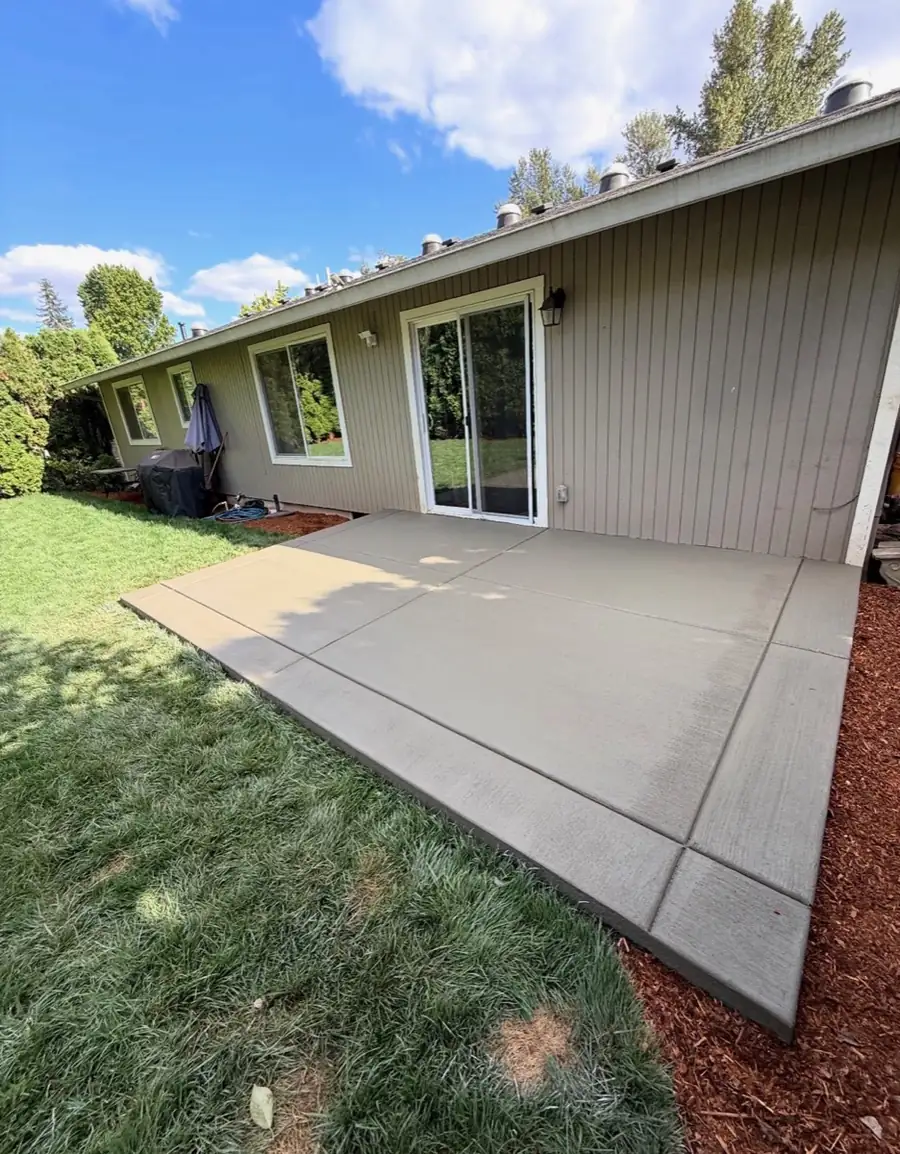
A residential concrete project runs in this order: free estimate, written scope, permits and utility locates, demolition and excavation, base and forms, reinforcement, pour and finish, jointing and curing, and a final walkthrough. Most driveways and patios take a few days on site, but curing continues for weeks. Call (503) 862-3881 for a free estimate.
The steps, in order
- Request a free estimate. Call (503) 862-3881 or use the quote form with your town, project type, approximate size and photos.
- On-site visit and written scope. We look at grade, water flow, access and existing concrete, then write a scope covering thickness, base, reinforcement, finish, demolition and drainage.
- Permits and utility locates. Confirm whether a permit is needed, get HOA approval if applicable, and call 811 before any digging so buried utilities are marked.
- Schedule and prepare the site. Pick a date with weather in mind; move vehicles, furniture and planters; mark sprinkler lines and irrigation heads.
- Demolition, excavation and base. Old concrete is removed, soil is excavated to depth, soft spots are corrected, and crushed rock is placed and compacted.
- Forms and reinforcement. Forms set the shape, edges and slope; rebar or wire mesh is placed on chairs at mid-depth.
- Pour, screed and finish. Concrete is placed, leveled, floated and given its finish, whether broom, exposed aggregate or stamped.
- Joints and curing. Control joints are cut or tooled, and the slab is protected and cured so it gains strength evenly.
- Final walkthrough and care. We review grade, drainage, joints and finish against the scope, then explain when you can walk, drive and seal.
Before you call: what to gather
A little preparation makes the first conversation more productive. Note your town, the type of project and rough dimensions, even if you pace them off. Take photos of the area, showing where water flows, where the old concrete is cracked and where a truck would need to park. Find any HOA guidelines, plat maps or notes about easements. Think about how you will use the space: parking, entertaining, hot tub, RV. The more we know at the start, the closer the written scope will be to the final project.
Permits: what usually applies
Flatwork such as a patio, a backyard walk or a replacement driveway on private property often does not need a building permit. Things that commonly do involve a permit or inspection include new driveway approaches or curb cuts connecting to public streets, sidewalk work in the right-of-way, retaining walls above certain heights, structural slabs and foundations, and anything in a mapped floodplain or historic district. Requirements vary between the City of Albany, City of Corvallis, City of Lebanon, Linn County, Benton County, Marion and Polk counties, and rural areas. Ask your local planning or building department, and if permits are needed, agree in writing who will obtain them.
Call 811 first
Oregon law requires notifying the Oregon Utility Notification Center, reached by dialing 811 or through its website, before digging. Utilities mark buried lines at no charge, generally within a few business days. Private lines such as irrigation, low-voltage lighting and septic components are not marked by utilities, so tell your contractor about them. Skipping this step risks safety and repair costs.
Base and forms: where durability is built
Excavation depth depends on the load and the soil. Topsoil and organic matter are removed, soft spots are corrected, and crushed rock is compacted in layers. Forms are set to the planned slope, typically away from the house, and staked firmly. This is the least photogenic part of the job and the part that decides whether the slab settles. Ask to see the base before the pour, and ask what depth is planned.
Pour day
Concrete arrives by truck and is placed quickly. Crews spread, screed and float the surface, then wait for bleed water to leave before finishing. Timing is craft. Weather matters: heat speeds setting, rain can damage a fresh surface, and cool damp weather slows curing. Expect noise, a truck on your street and limited access to the area. Keep pets and children away from wet concrete.
Curing and first weeks
Fresh concrete needs moisture and moderate temperature to gain strength. Foot traffic is often possible in a day, cars after roughly a week, and heavy vehicles later. Keep sprinklers off the slab and avoid de-icing salts in the first winter. A sealer, if used, is usually applied after the concrete has cured enough. A few hairline shrinkage cracks are normal; joints are there to guide them. Call us if you see anything that concerns you.
Frequently Asked Questions
How long does a driveway take?
Most residential driveways are prepared and poured in a few working days, weather permitting. Curing continues for weeks.
When can I drive on new concrete?
Foot traffic is often okay in about a day; cars typically after about a week; heavier vehicles later, depending on mix, thickness and weather.
Who calls 811?
The person digging is responsible. We coordinate with you so locates are done before excavation.
Related guides
Our services
Ready to talk about your project? Call or text (503) 862-3881, Monday to Saturday, 7:00 AM to 8:00 PM, or use the free quote form.
Call (503) 862-3881