Last updated: October 2026
Quick answer
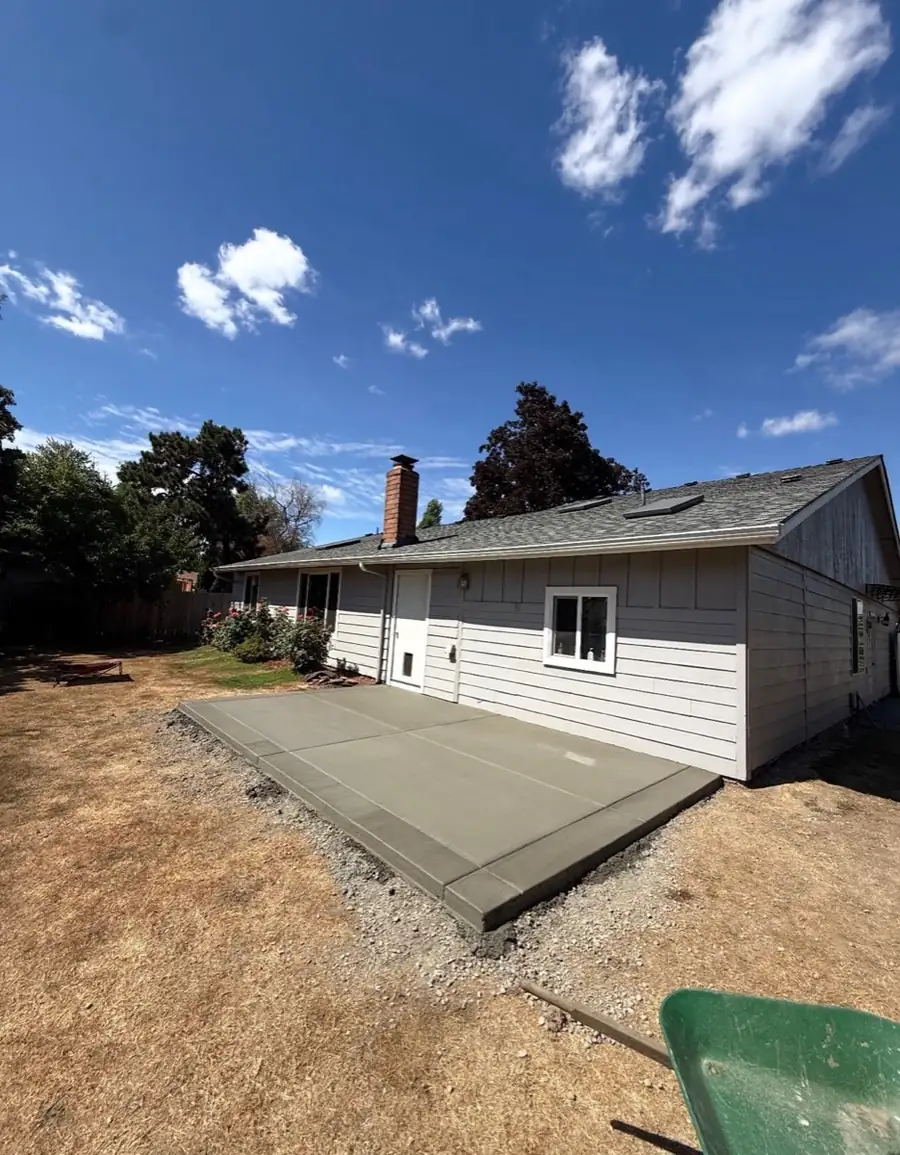
In the Willamette Valley, water is the main enemy of concrete. Long-lasting flatwork needs a compacted rock base, a slope that sheds rain, a plan for roof and yard water, joints that let the slab move, and a textured finish that grips when wet. Freezes are occasional, so sparing de-icer use and proper curing matter, especially in a slab's first winter. Free estimates: (503) 862-3881.
Why the valley is hard on concrete
Albany averages roughly 40 inches of rain a year, most of it between October and May, with long stretches of gray, damp weather and a summer that is mostly dry. That pattern means soil under a slab is saturated for months and then dries and shrinks. The valley floor is also flat, so water does not run off naturally and can sit in low spots. Add clay and silt soils that hold water and soften, and you have conditions where a shallow base or missing drainage shows up quickly as settling, edge undermining and cracks.
Clay and silt soils
Much of the mid-Valley sits on fine-grained soils deposited by the Willamette and its tributaries. They are fertile, which is why the valley grows grass seed and hazelnuts, but they hold water, swell when wet and can lose strength when saturated. Under a slab, that means a thin or poorly compacted base can move. The remedy is straightforward: remove topsoil and organic material, correct soft spots, and place and compact crushed rock in lifts, deep enough for the load. A geotextile fabric between soil and rock is sometimes used on the softest sites. It is not glamorous work, and it is where most of the durability comes from.
Drainage: the highest-value detail
Point roof downspouts away from slabs and foundations, and extend them or connect them to a drain. Slope patios and walks at roughly one-eighth to one-quarter inch per foot away from the house, and driveways so water leaves toward the street or a planned drain. Watch for places where neighboring yards or hillsides send water toward your slab, and consider a swale, gravel trench or French drain to intercept it. Keep soil and mulch from piling against the edge of a slab, which can trap moisture and hide undermining.
Freeze-thaw and de-icers
Hard freezes are occasional in the valley but not rare, and they hit hardest when saturated concrete freezes and expands. Air-entrained concrete mixes, proper finishing and curing, and a base that drains reduce the risk. Avoid rock salt and harsh de-icers on new concrete, especially in its first winter, since they can cause surface scaling. Sand or a small amount of calcium magnesium acetate is gentler. Shovel snow rather than melting it with chemicals when you can. Towns closer to the Cascades, like Sweet Home and Lebanon, see more frost than Albany or Corvallis.
Moss, algae and slippery slabs
Shaded, damp concrete grows algae and moss in our climate. A green film can be very slippery. Reduce it by trimming limbs to let in sun and air, sweeping leaves and needles, and cleaning with a soft brush and a mild cleaner made for concrete. Avoid pressure washing at close range, which can etch the surface and remove sealer, and be careful with bleach near plants and runoff. A broom or exposed-aggregate finish helps traction, and a sealer with a slip-resistant additive is worth considering for shaded steps and walks.
Sealing: when it helps and when it does not
Sealers protect against stains and moisture and can enhance color on decorative concrete. Penetrating sealers leave a natural look; film-forming ones add sheen but can be slick when wet unless a grit additive is used. Plain gray driveways do not always need sealing, but decorative work generally does, on a schedule of every few years. Sealer will not fix drainage or a bad base. If you want the details for stamped work, see the stamped concrete page.
Timing your pour
Late spring through early fall gives the driest, most reliable pour windows, and that is when most residential concrete is placed. Cooler months can work with planning: forecasts are watched, fresh concrete is covered when rain threatens, and curing is extended in cold weather. If a contractor pours into an obvious storm, ask why. We would rather reschedule than pour into a failure. See the project process guide.
Frequently Asked Questions
Does Albany get cold enough to damage concrete?
Occasional hard freezes can damage saturated or poorly built concrete, so drainage, curing and careful de-icer use matter.
Why is my concrete green?
Algae and moss grow on damp, shaded concrete. Sun, airflow, gentle cleaning and a textured finish help.
Should I seal a plain gray driveway?
Not always. Sealing matters most for decorative work. Drainage and base matter more for a plain driveway.
Related guides
Our services
Ready to talk about your project? Call or text (503) 862-3881, Monday to Saturday, 7:00 AM to 8:00 PM, or use the free quote form.
Call (503) 862-3881